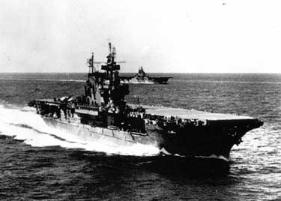
 Of the two vessels, both aircraft
carriers, to bear the name Enterprise in the 20th Century, The Yorktown-class Carrier Vessel
(CV) 6 is the most famous of the two. CV-6 was commissioned on 12 May 1938, 28 and a half years after its predecessor
was sold by the US Navy. This carrier would serve in almost every major Pacific Theater battle of World War II. This
vessel's aircraft would duel with Japanese attackers on December 7, 1941. CV-6 escorted its sister ship,
USS Hornet in the Doolittle Raid on Tokyo in early 1942. The vessel's aircraft participated in the sinking of
three Japanese aircraft carriers in the Battle of Midway. Enterprise fought with distinction until the end of
World War II. The ship was severely damaged by a Japanese Kamikaze attack on May 14, 1945. Repairs kept the vessel out
of service until the end of the war. The carrier returned 10,000 soldiers to the United States after the war ended.
The vessel was decommissioned and placed in reserve on February 17, 1947. The vessel was reclassified twice; first as
an attack carrier (CVA) on 1 October 1952, then as a antisubmarine carrier (CVS) on August 8, 1953. Enterprise
was removed from the Naval Vessels Register on October 2, 1956. Attempts to turn the ship into a museum in 1949 &
1956 failed. The US Navy sold it for scrap on July 1, 1958 and the ship was completely dismantled by the end of March
1960. During the vessel's distinguished career, it received 20 of 22 combat stars. The vessel was credited with the
sinking of 71 enemy ships and shooting down 911 aircraft. Enterprise was the most decorated ship of World War
II.
Of the two vessels, both aircraft
carriers, to bear the name Enterprise in the 20th Century, The Yorktown-class Carrier Vessel
(CV) 6 is the most famous of the two. CV-6 was commissioned on 12 May 1938, 28 and a half years after its predecessor
was sold by the US Navy. This carrier would serve in almost every major Pacific Theater battle of World War II. This
vessel's aircraft would duel with Japanese attackers on December 7, 1941. CV-6 escorted its sister ship,
USS Hornet in the Doolittle Raid on Tokyo in early 1942. The vessel's aircraft participated in the sinking of
three Japanese aircraft carriers in the Battle of Midway. Enterprise fought with distinction until the end of
World War II. The ship was severely damaged by a Japanese Kamikaze attack on May 14, 1945. Repairs kept the vessel out
of service until the end of the war. The carrier returned 10,000 soldiers to the United States after the war ended.
The vessel was decommissioned and placed in reserve on February 17, 1947. The vessel was reclassified twice; first as
an attack carrier (CVA) on 1 October 1952, then as a antisubmarine carrier (CVS) on August 8, 1953. Enterprise
was removed from the Naval Vessels Register on October 2, 1956. Attempts to turn the ship into a museum in 1949 &
1956 failed. The US Navy sold it for scrap on July 1, 1958 and the ship was completely dismantled by the end of March
1960. During the vessel's distinguished career, it received 20 of 22 combat stars. The vessel was credited with the
sinking of 71 enemy ships and shooting down 911 aircraft. Enterprise was the most decorated ship of World War
II.
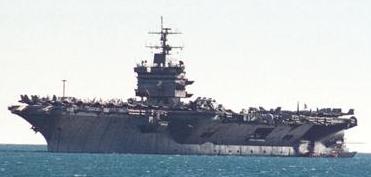 The second USS Enterprise of the 20th Century was commissioned as Nuclear Powered
Attack Carrier Vessel (CVAN) 65 on November 25, 1961. CVAN-65 was the first nuclear powered aircraft carrier and
longest warship built at that time. The vessel was built with a square island that supported phased array radar and a
then-complex Electronic Warfare (EW) system. Enterprise participated in the blockade of Cuba during the "Cuban
Missile Crisis" in October, 1962. During 1963 the nuclear powered aircraft carrier would circle the globe with the
nuclear powered vessels USS Long Beach and USS Bainbridge. A flight deck fire, occurring on January 14
1969 caused by exploding ordance was quickly contained and extinguished. Unfortunately, 27 sailors lost their lives
and 314 others were injuried. The carrier also lost 15 aircraft and was force to have repairs conducted at the Pearl
Harbor Naval Shipyard, Hawaii until March 1 of the same year. CVAN-65 was the first nuclear vessel in combat where
the vessel's aircraft struck targets in Vietnam during the Vietnam Conflict. The ship assisted in the evacuation of
Saigon (Ho Chi Minh City) at the end of that conflict in 1975. Also in 1975, Enterprise was reclassified as
CVN-65 on June 30 of that year.
The second USS Enterprise of the 20th Century was commissioned as Nuclear Powered
Attack Carrier Vessel (CVAN) 65 on November 25, 1961. CVAN-65 was the first nuclear powered aircraft carrier and
longest warship built at that time. The vessel was built with a square island that supported phased array radar and a
then-complex Electronic Warfare (EW) system. Enterprise participated in the blockade of Cuba during the "Cuban
Missile Crisis" in October, 1962. During 1963 the nuclear powered aircraft carrier would circle the globe with the
nuclear powered vessels USS Long Beach and USS Bainbridge. A flight deck fire, occurring on January 14
1969 caused by exploding ordance was quickly contained and extinguished. Unfortunately, 27 sailors lost their lives
and 314 others were injuried. The carrier also lost 15 aircraft and was force to have repairs conducted at the Pearl
Harbor Naval Shipyard, Hawaii until March 1 of the same year. CVAN-65 was the first nuclear vessel in combat where
the vessel's aircraft struck targets in Vietnam during the Vietnam Conflict. The ship assisted in the evacuation of
Saigon (Ho Chi Minh City) at the end of that conflict in 1975. Also in 1975, Enterprise was reclassified as
CVN-65 on June 30 of that year.
Following the vessel's ninth deployment, Enterprise travelled to Puget Sound Naval Shipyard,
Washington (state) for a 36-month comprehensive overhaul between 1979 and 1982. Also, between 1990 to 1994,
Enterprise was refueled and overhauled at Newport News Shipbuilding, Virginia to extend the vessel's service
life. Upon receiving reports of terrorists attacks in the United States on September 11 2001, Enterprise,
beginning a journey home from the Persian Gulf, reportedly, reversed course without orders and returned to the
Persian Gulf, outrunning her escorts.
The United States Congress passed and President Barack Obama signed into law "The National Defense
Authorization Act for Fiscal Year 2010" on October 28, 2009. The passage of this act slated the decommissioning of
the Enterprise in 2013.
CVN-65 has had 23 commanding officers since the ship was commissioned in 1961. The vessel is
currently under the command of Captain William C. Hamilton, Jr. since August 17 2011 as the vessel's 23rd
[and final?] Commanding Officer. Following the completion of its' final deployment, Enterprise returned to
its' homeport of Norfolk Naval Station, Virginia on November 4, 2012 and was declared 'inactive' on December 1, 2012,
ending an unprecedented 51 years of service to the United States of America and its' Navy as the nation's longest
serving combat vessel.
Ultimately, Enterprise will be decommissioned once the vessel's nuclear fuel is removed along
with critical and/or sensitive hardware. Due to the extensive nature of the "de-fueling" process, CVN-65 will not be
in a condition to serve as a muesum. What remains of the ship, following decommissioning, will, most likely, be
scrapped. For further information on CVN-65, click on the image of the Enterprise, which is courtesy of the
USS Enterprise [CVN-65] web site.
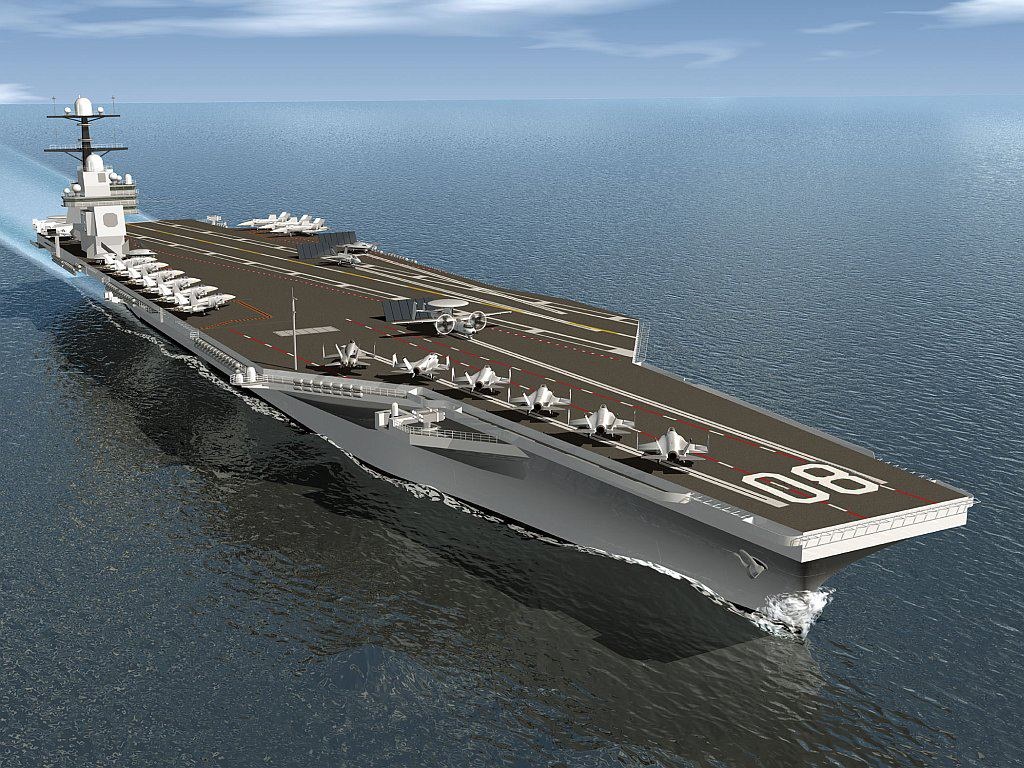 Dispite the forthcoming
decommissioning of CVN-65, the future of the name Enterprise within the annuals of the United States Navy is
secure. During the inactivation ceremony of CVN-65 on December 1 2012, the Secretary of the Navy, Ray Mabus,
announced in his recorded message that the next Gerald R. Ford-class aircraft carrier, the third ship of the
class, already classified as CVN-80, will be named as Enterprise, making the vessel the ninth ship of the
United States Navy to bear the illustrious name once it is commissioned in 2025.
Dispite the forthcoming
decommissioning of CVN-65, the future of the name Enterprise within the annuals of the United States Navy is
secure. During the inactivation ceremony of CVN-65 on December 1 2012, the Secretary of the Navy, Ray Mabus,
announced in his recorded message that the next Gerald R. Ford-class aircraft carrier, the third ship of the
class, already classified as CVN-80, will be named as Enterprise, making the vessel the ninth ship of the
United States Navy to bear the illustrious name once it is commissioned in 2025.